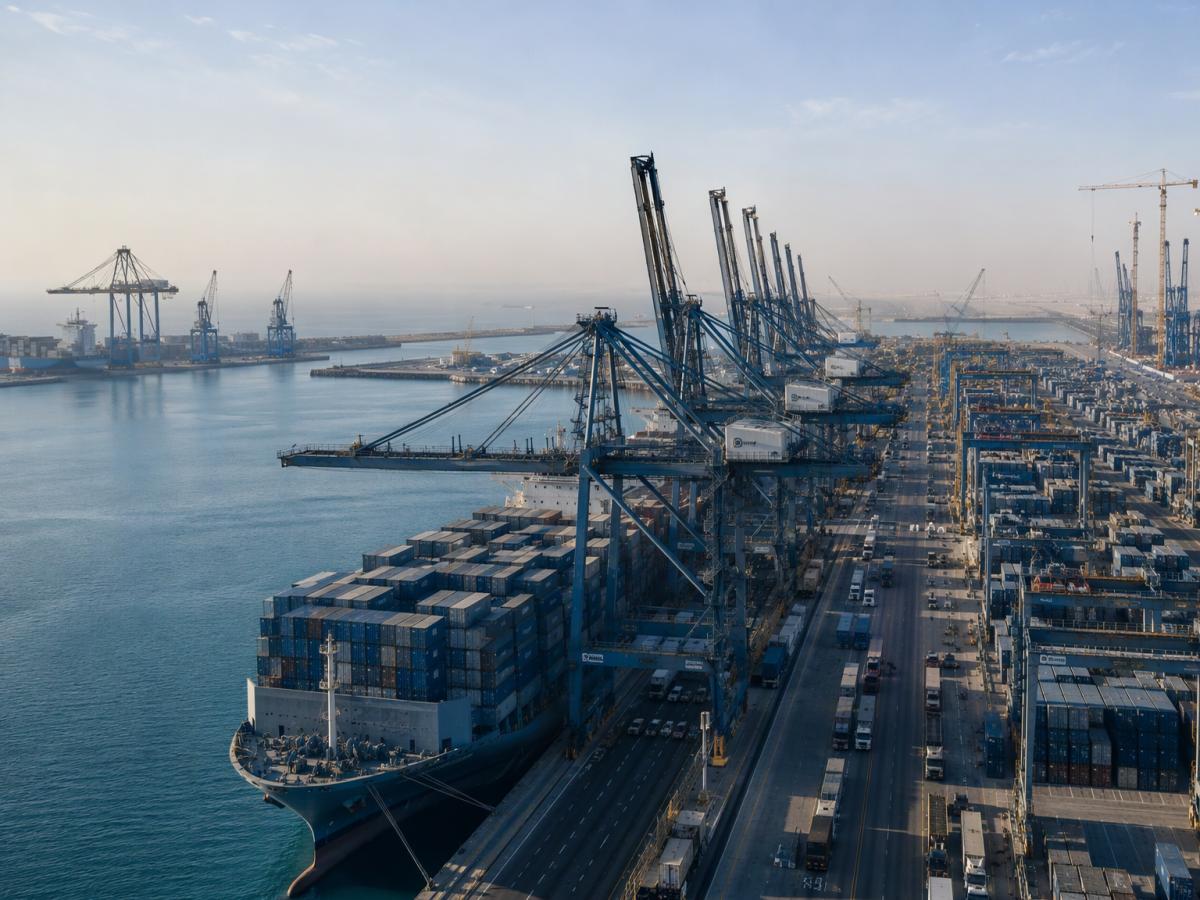
The UAE is taking another major step towards strengthening its position as a global trade and logistics hub. DP World is accelerating the development of two new port terminals in Fujairah, expanding the country's east coast maritime infrastructure and improving connections with Dubai and other key commercial centres.
The AED 2.5 billion investment in Al Rugaylat Container and Multipurpose Terminal and Dibba General Cargo Terminal reflects the UAE's long-term commitment to developing a more connected, flexible and resilient logistics network.
Expanding Fujairah's Port Capacity
The projects will significantly increase the UAE's port handling capacity:
Al Rugaylat Terminal: Designed to handle up to 2.5 million TEUs annually, alongside 1.7 million tonnes of general cargo and 190,000 car equivalent units.
Dibba Terminal: Expected to provide up to 3.6 million tonnes of annual general cargo capacity.
Once operational, the two terminals will increase DP World's total container-handling capacity in the UAE from 19.4 million TEUs to nearly 22 million TEUs.
The terminals will be developed in phases, with operations now targeted to begin within 18–24 months, earlier than the original estimate of 24–30 months.
Strengthening Connectivity Between Fujairah and Dubai
Beyond expanding port capacity, the project aims to establish a more integrated logistics network connecting Fujairah with Jebel Ali Port, Jebel Ali Free Zone (JAFZA) and other major logistics centres.
Through DP World's inland logistics network, cargo arriving at Fujairah's east coast terminals will be able to move onwards to Dubai and other UAE markets through coordinated road and rail transportation.
Recent logistics developments demonstrate the importance of this approach. Between early March and the end of October 2026, DP World moved more than one million TEUs from east coast ports to Jebel Ali and domestic markets using alternative road and rail corridors.
The company also operates a network of more than 3,000 trucks, with approximately 3,500 TEUs moving through these inland corridors daily.
These developments highlight the growing importance of multimodal transportation in supporting the UAE's trade activities.
Building a More Resilient Supply Chain
As international trade becomes increasingly exposed to shipping disruptions, transportation costs and geopolitical uncertainties, logistics flexibility has become a major consideration for businesses.
Fujairah's location on the Gulf of Oman provides access to maritime routes outside the Strait of Hormuz. Combined with its connections to Dubai and other logistics centres, the new terminals will offer businesses additional options for cargo handling and distribution.
For importers, exporters and shipping companies, a diversified port network can provide greater flexibility in selecting transportation routes, managing delivery schedules and responding to changing market conditions.
DP World's investment represents more than the construction of two additional port terminals. It is part of a wider effort to strengthen the connections between the UAE's ports, industrial zones, free zones and domestic markets.
As Fujairah expands its maritime capabilities and its links with Dubai improve, the emirate is expected to play an increasingly important role in the country's logistics and trade network.
The future of trade depends not only on how much a country can move, but also on how efficiently and flexibly its supply chains can connect markets.